
Presence as Material
Part I: The Erasure of Heritage and Cultural Influences on Interior and Spatial Design
Our presence, interactions and digital reproductions of and within spaces have become part of the material language of design. Social media has transformed interior design from a static art of physical material arrangement into a dynamic, participatory practice where online visibility and shareability are design materials prioritized due to its financial value. Social media has altered the very ontology of space. The “experience” of the third place no longer requires physical presence; people can “know” a place merely by having seen it within the digital space. Reality becomes secondary to its representation; presence is engineered.
Think back to when you have said “I know that place” without having ever been there.
What it means to know something has changed.
Because the image stands in for lived experience, designers must not only anticipate how people will present themselves within a space but also how they will present the space virtually, whereby the modern interior exists simultaneously as place and post – new considerations for visual durability have denecessitated material durability. Therefore, presence refers not just to physical occupancy but to visibility, representation and the desirability of the space by users of social media platforms, who are from a plethora of cultures. Repeated designs, materials and color schemes perpetually shared on social media have infiltrated our subconscious; we cannot help but perceive the same aesthetic as desirable. This ultimately leads designers to imitate the outcome of projects that achieve virality.
Has the experience of spaces been replaced by the image of experience?
These reflections raise critical questions on the authenticity of spatial experience. Presence, once personal and embodied, becomes performative — an act within the visual economy of attention. Regardless, the beneficiaries of digital performativity are the privately-owned third places, such as cafés and bars, whereby Instagrammable designs are an intentional marketing strategy which generates free promotion. Hence, design becomes a participatory act where customers are encouraged as co-creators.
Henri Lefebvre’s theory of space as socially produced argues that space is a product of use and interaction, with meaning extended beyond its physical form that is negotiated, over time, by occupants of the space. In the new age, collaboration constitutes the act of virtual documentation, through which visitors bring forth their perception of the space. The aggregation of these representations form the collective narrative about the space, which is ever-evolving, as opposed to traditional approaches to interior design as wholly a product of the designer. The role of designers has shifted towards the creation of frameworks for participation and open-ended storytelling—space becomes a dialogue between creator and user/audience, and the identity of the space becomes a product of their co-creation.
However, challenges arise when the aim of interior design is to appeal to a non-specific audience of varying backgrounds – the most evident and preluding concern being the universal homogenization of design aesthetics due to commercialization. This neglect for spatial context dilutes the influences of local culture in design. Though it is good that spaces emerge from collective dialogue, not imposition, there lies the risk of conformation through visual culture: people visit spaces to reproduce the images they have already seen, rather than to experience something unique to themselves.
In metropolizing Bangkok, coffee shops built post-Covid, when short-form content adjacently became popular, have majoratively adopted foreign but universalizing interior design styles such as Scandinavian, Japandi, modern industrial, organic modern, warm minimalism, kanso (wabi-sabi, ma) and mid-century modern, with no connection to, or celebration of, the culture in which the space is located. This is not to say that such design principles are rid of cultural roots. Mid-century modern design, for instance, drew inspiration from Scandinavian design principles and American craftsmanship, becoming a product of cultural fusion. However, the reproduction of such designs in spaces geographically outside of its sphere of origin reflects the dilution, or altogether neglect, of local design principles and motifs.
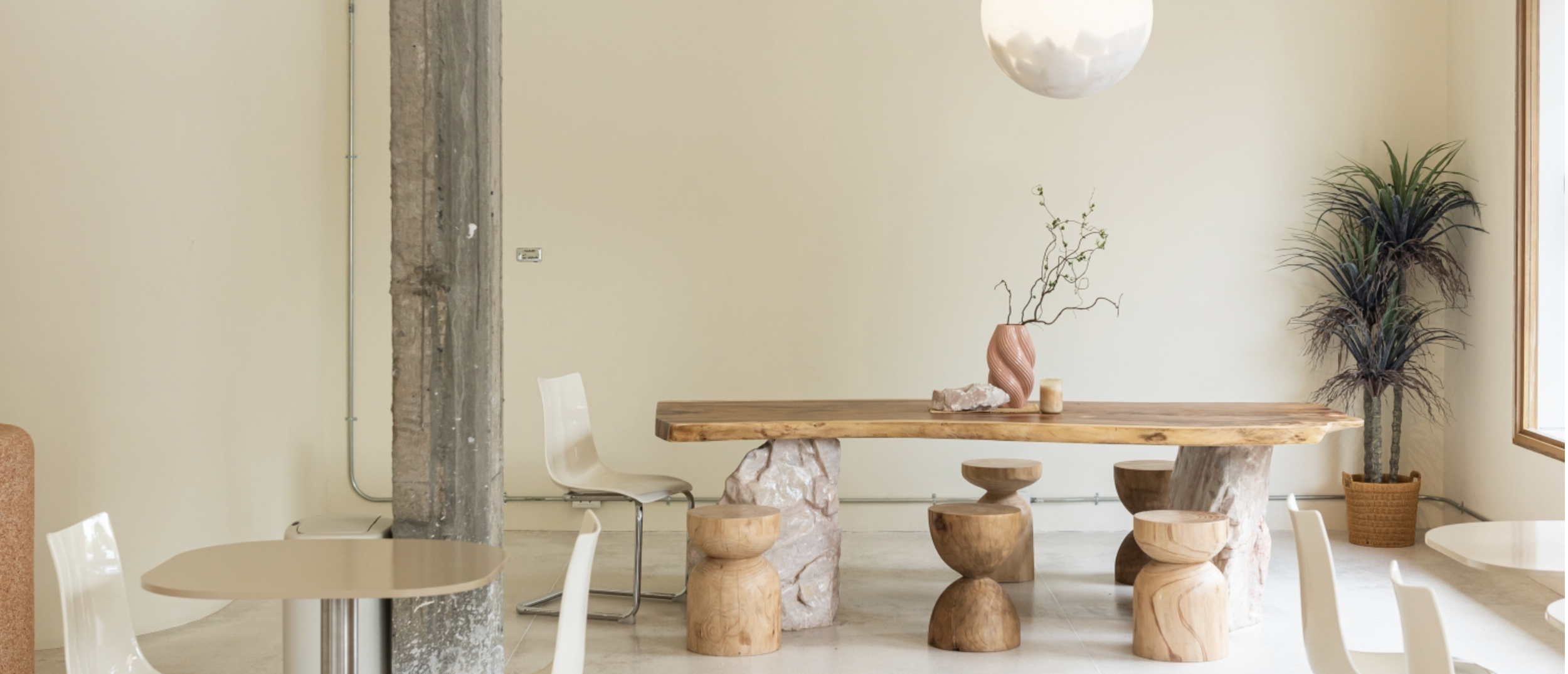
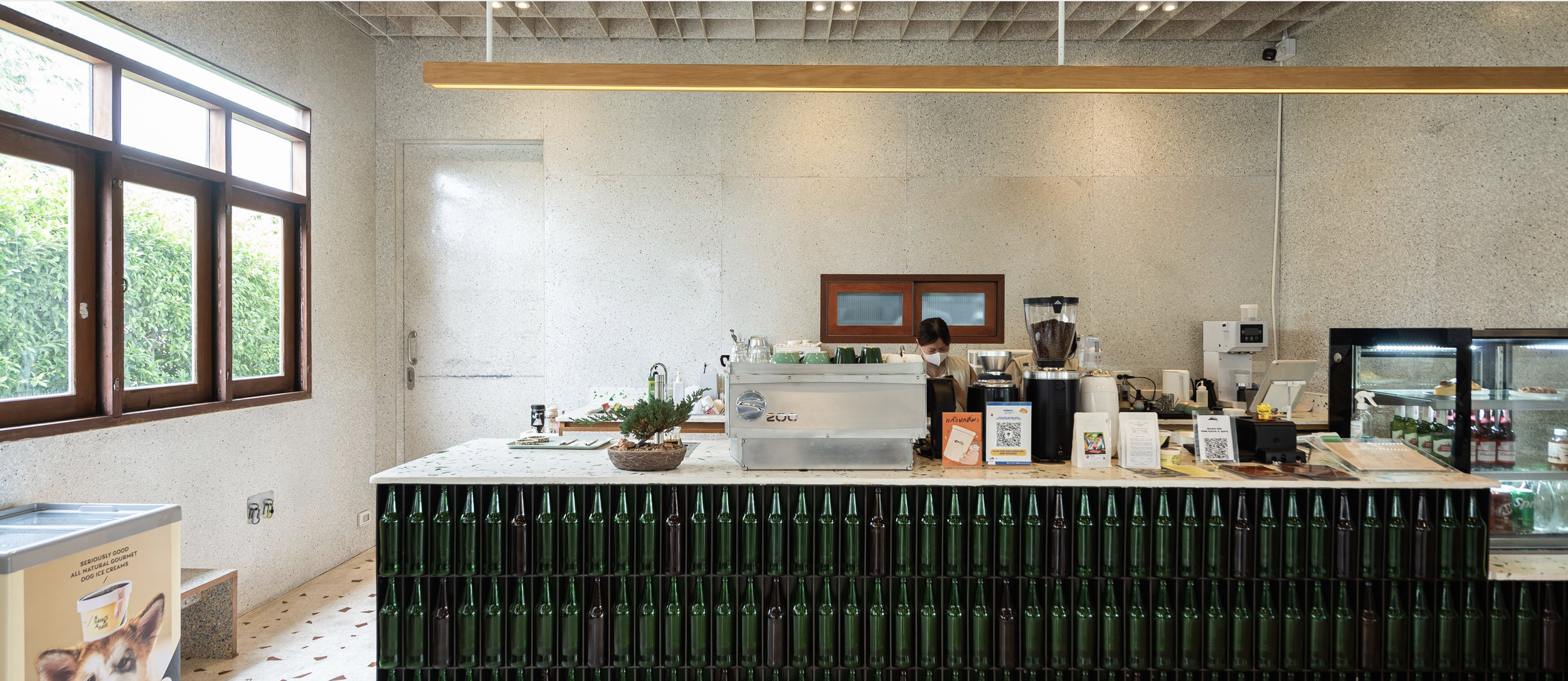
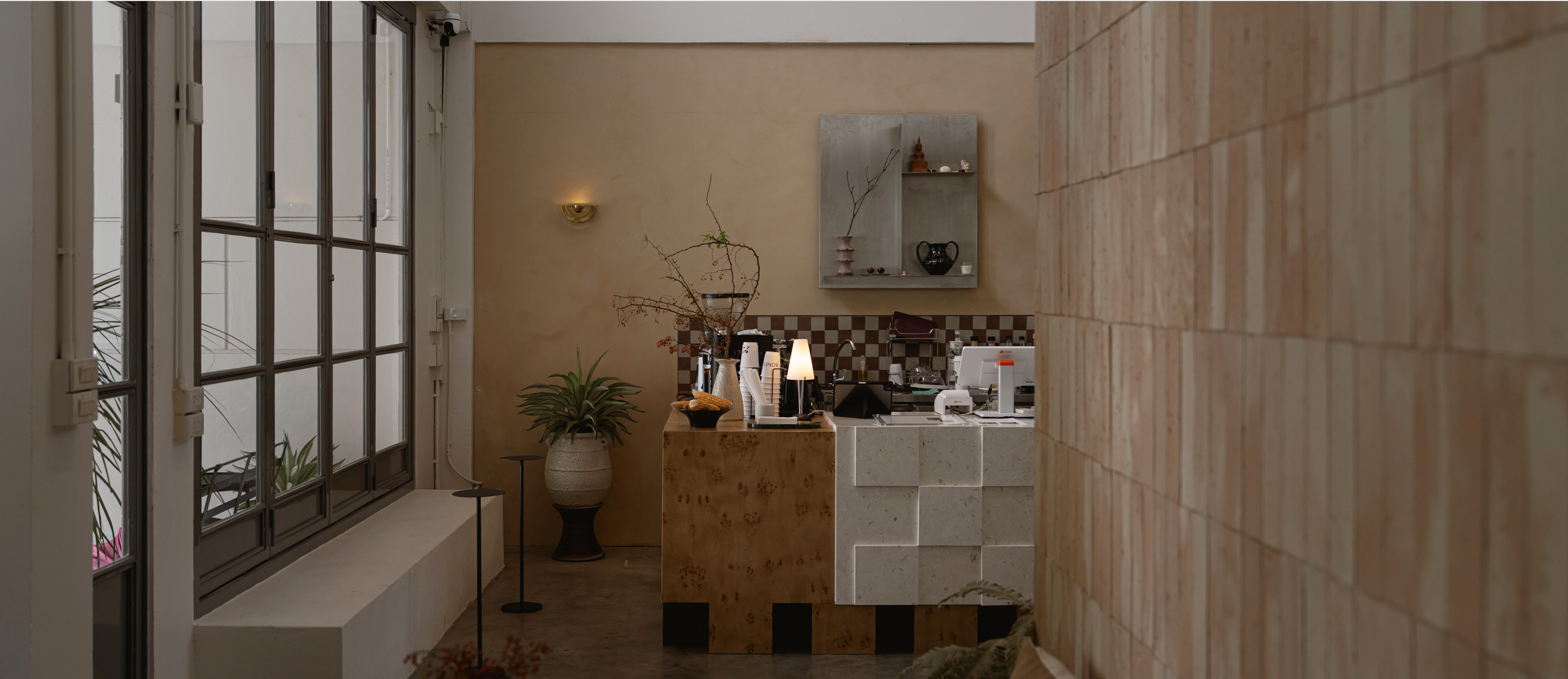
Many coffee shops and restaurants still remain in the Charoenkrung area of Bangkok where the owner(s) maintains an inextricable relationship with the place they own, developing the space through collecting and displaying objects meaningful to them and the space over time. The desire for progress and sophistication has led the interior design of third spaces in Bangkok to conform to global aesthetics, which simultaneously is a result of, and results in, the urgency to move away from local culture. However—design provides the opportunity for cultural identity to be shared and sustained across generations; heritage allows for permanence in belonging through collective identities. So much value is lost from walking away from our history.
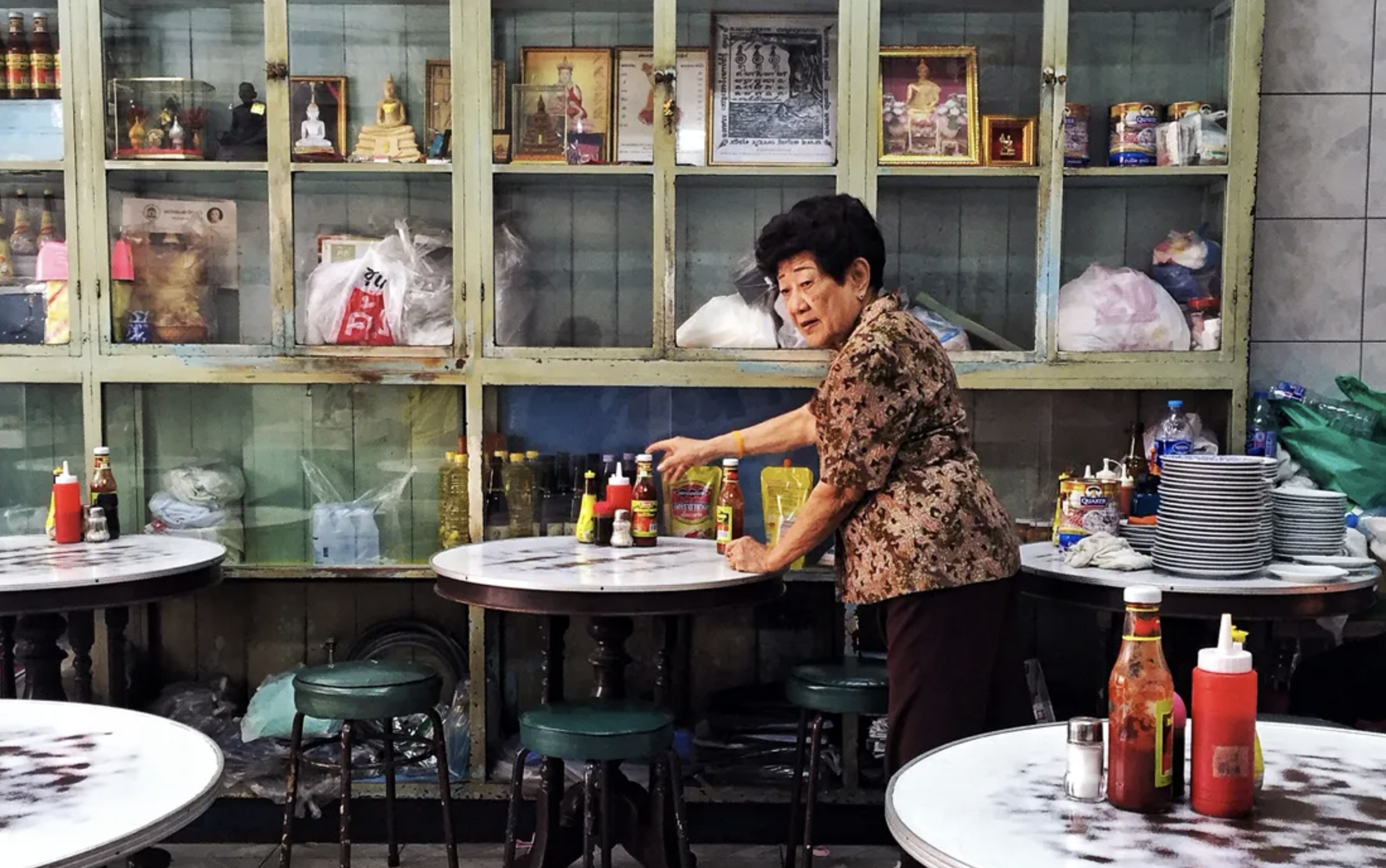
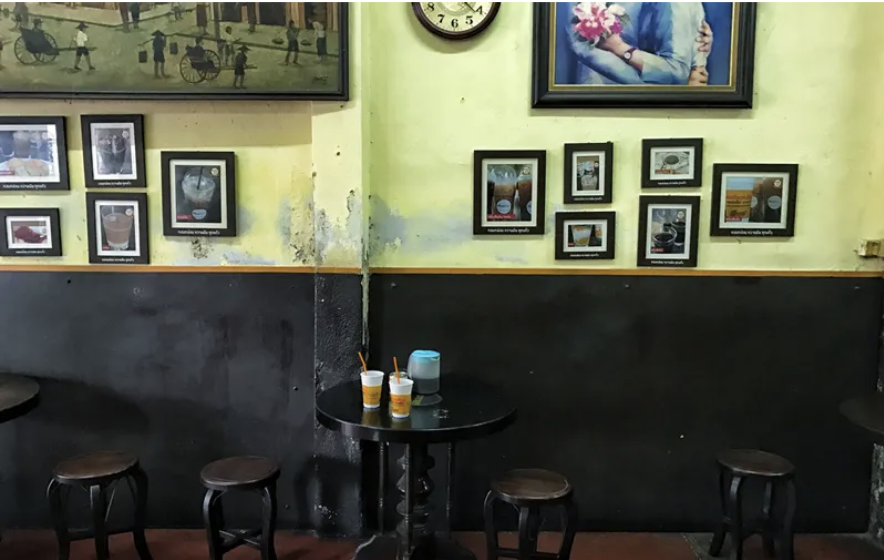
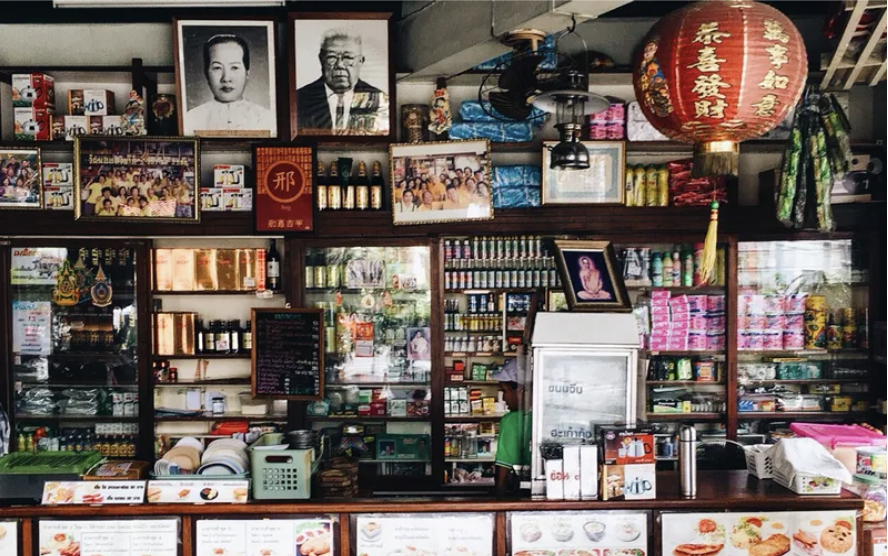
Interior aesthetics serve as repositories of collective memory, developed through material collection, experience and time – an embodiment of the history, values, and aspirations of the space’s occupants. Not only are modern spaces with sterile design aesthetics rid of any form of collective and social memory, it is also rid of individuality and self-expression – designs are not personal to the creator but are filtered through templates of what performs well online, which translates to immediacy in financial gain. When objects that lay within a space once had stories behind them, they have now become mere commodities.
Spaces are rid of identity formation through time and place-making, and hence rid of cultural depth. While spaces with universal design aesthetics may offer a temporary sense of belonging and digital validation, people are left strangers in their shared spaces.
* An important note: social media has also cultivated renewed appreciation for local traditions and cultures, and a demand for their preservation in light of homogenization. Therefore, the relationship between heritage erasure and digitalization is complex and multifaceted. It is not all doom and gloom.
Part II – Preserving Cultural Authenticity: Critical Regionalism
Site-specific design involves creations that are contextually embedded and responds to its surroundings, with meaning inherently derived from its location. Symbolic identity, however, involves the selection of elements that hold symbolic significance to the place and incorporating it in the design, as exemplified by Jean Nouvel’s reinterpretation of regional symbols through pushing the boundaries of design with his philosophy rooted in contextualism and innovation. Such is an example of a modern approach to localism that transcends traditional constraints, balancing past and present.
As Raj Rewal advocates, there is a need to redefine modernity to align with local traditions and cultural heritage, developing a design language that responds to needs specific to the spatial locality, local climates and materials, and users’ lifestyles. From the perspective of modernist regionalism, Lewis Mumford discerned two elements in every design: the local and the regional. This means that spaces must satisfy the circumstances of a specific people and place, meanwhile transcending local boundaries, which is essential for achieving sophistication unattainable at the stage of primitive existence.
Similarly, the design paradigm of critical regionalism emphasizes the importance of place-making and the cultivation of a collective identity, involving the mediation of the universalizing influences by integrating elements inspired by the specific locality. Critical regionalism approaches the design process with inspiration from local materials, climatic conditions, spirits and values, prehistory, archaeological past, and evolution, rather than a direct replication of these elements. This approach demands a high level of critical self-awareness and supports designers who are committed to preserving local identity while seeking innovative solutions that reinterpret local heritage elements within universal design aesthetics and elements. This reflexivity in design allows for the interplay between tradition and creativity, yielding the creation of a built environment that has greater meaning due to its balance between cultural specificity and its responsiveness to contemporary needs.
Exhibit A: Messenger Service Bar in Bangkok Old Town
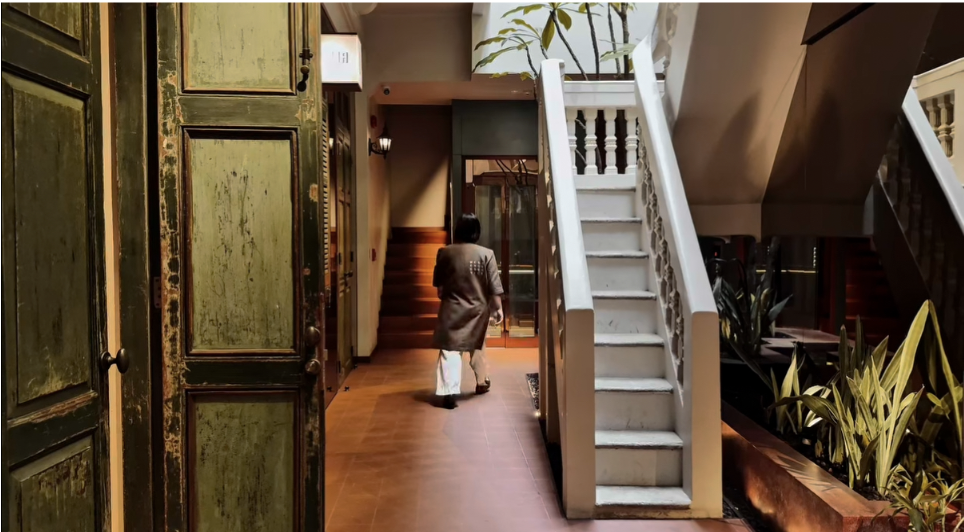
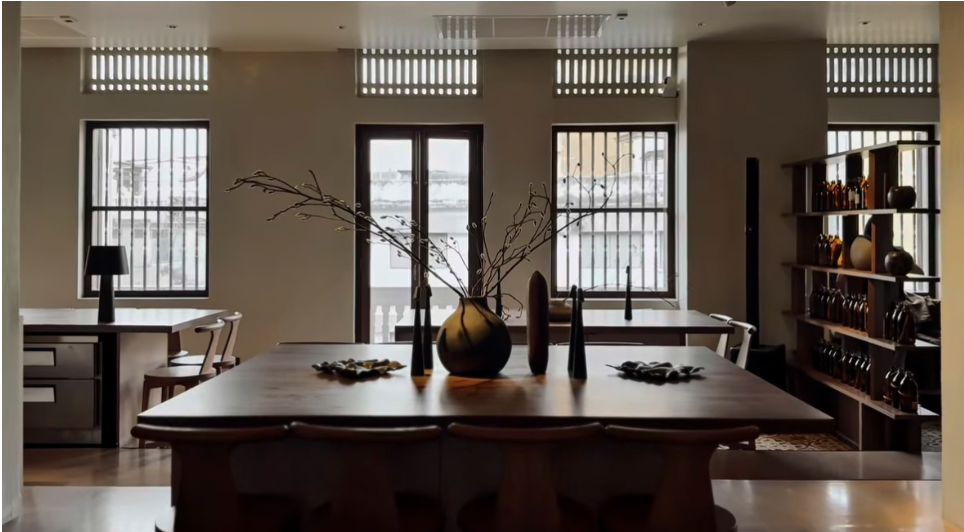
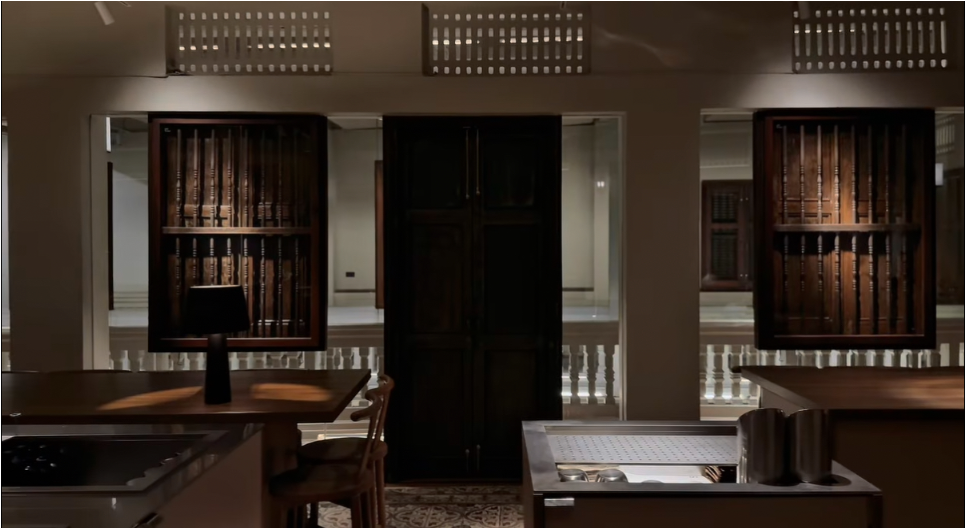
Messenger Service Bar, in Bangkok, Thailand, offers a reinterpretation of Thai heritage by blending local materials and traditional architectural elements with modern design principles and aesthetics. Weathered wooden folding doors originally prevalent among 19th - 20th century shophouses (talaat or Sino-Thai rowhouses), which functionally allows for ventilation in Thailand’s heat, and classic balustrades in white, are odes to the city’s rich cultural and architectural history. On the other hand, minimalist furnishings, dim lighting, and open spatial design are inspired by contemporary aesthetics.
The wooden balusters repurposed as window screens are a distinctive feature found in old Thai verandas (chan), which are open and raised platforms serving as a gateway to the house. Designing through the vernacular language of Thai domestic architecture demonstrates how adapting heritage architectural elements can create a sense of modernity while preserving the sense of place, memory, and local identity.
In the age of social media, where information and aesthetics are disseminated globally, it is particularly important to promote cultural sustainability through design and ensure its preservation for future generations. In this sense, social media can work for instead of against local design heritage, and enrich the landscape of interior design. A perception shift in what value means in the scope of interior design is called for – is true value determined by monetary gain and instant visual impact, or is it artistic expression and cultural resonance? Though the financial pressure to conform to universal design principles is undeniable, —because design is a form of art, is it not more enriching for designers to create a space that is also culturally meaningful through design glocalization – making something that is wholly their own?