
Christiane Rahbek: Curating Copenhagen’s Bodies into Design Statements
From a small art collective to global clientele including artists like LA based SIIICKBRAIN, Noah Cyrus and the Norwegian rapper Sa_G, the Copenhagen-based artist is shaping how a generation wears style and identity.
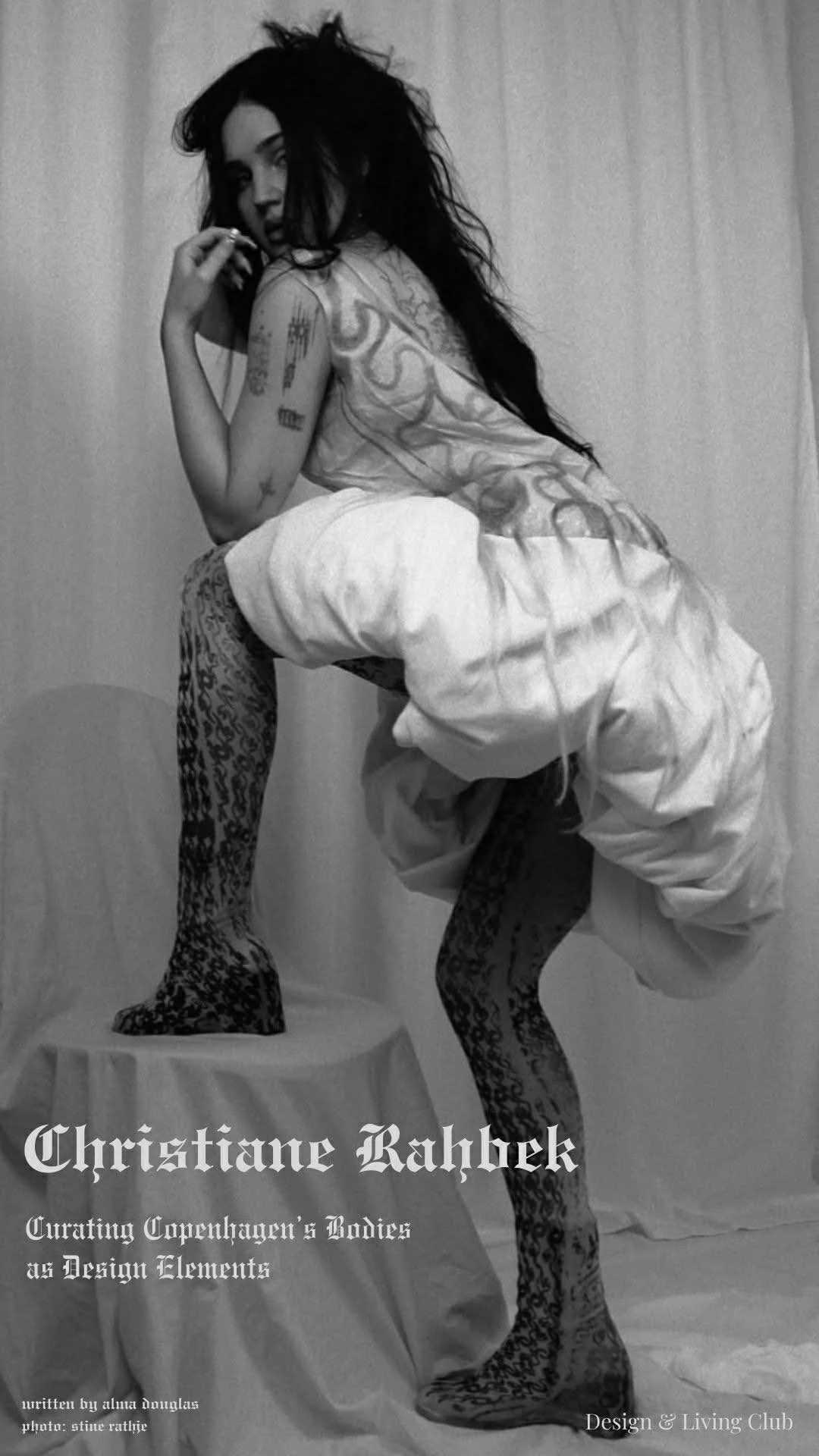
Photo: Stine Rathje
They are not loud, yet they command attention. They don’t sit on the body, they define its silhouette. These tattoos do not interrupt an outfit; they complete it. They move with the body, framing gestures, sharpening silhouettes, functioning less like illustrations and more like design elements.
The new abstract tattoo aesthetic is not simply a trend. It reflects a broader shift in how style operates in Copenhagen, where the body itself has become a deliberate design element.
At the centre of this evolution is tattoo artist Christiane Rahbek - known to many as @bbyangeltattoo, whose fine, ornamental linework has become part of the city’s emerging visual language. In her hands, the body is not simply marked - it is curated.
Design & Living Club spoke with her about art, self-expression and the role of the body in Copenhagen’s style culture.
From drawing to skin
Christiane Rahbek did not originally set out to become a tattoo artist.
“I’ve always loved drawing,” she says. “And I’ve always been fascinated by how people express themselves visually - through makeup, jewellery, clothing, and eventually, skin.”
Before tattooing entered the picture, Christiane attended various preparatory art programs and creative courses, building a portfolio with the intention of applying to an art academy. Tattooing appeared almost by coincidence within an art collective of fellow young creatives, where she met a girl whose abstract, black tattoos immediately captivated her.
“I just thought they were incredibly beautiful,” she recalls.
Curious, she borrowed her tattoo machine and began experimenting – first on grapefruits, then eventually on friends.
“It was very learning by doing”, she explains. “But it made sense to my brain chemistry. The lines, the shapes, the restriction of working in black on a skin surface appealed to me.”
What began as practice became a practice – and eventually, a signature. In the beginning, her work was faster, wilder, more impulsive - a direct translation of instinct onto skin. Over time, it became more controlled, more attentive to anatomy, more sensitive to the body’s contours.
Today, her approach is rooted in composition.
A tattoo, she insists, should not feel like a sticker placed on skin.
“It should follow the architecture of the body.”
The Body as Composition
Christiane Rahbek speaks about the body almost like an interior space. The shoulder becomes a structural point. The back a frame. The skin a living surface that shifts with movement and posture.
“I’m interested in how it flows,” she says. “It shouldn’t just sit there. It should speak to the body.”
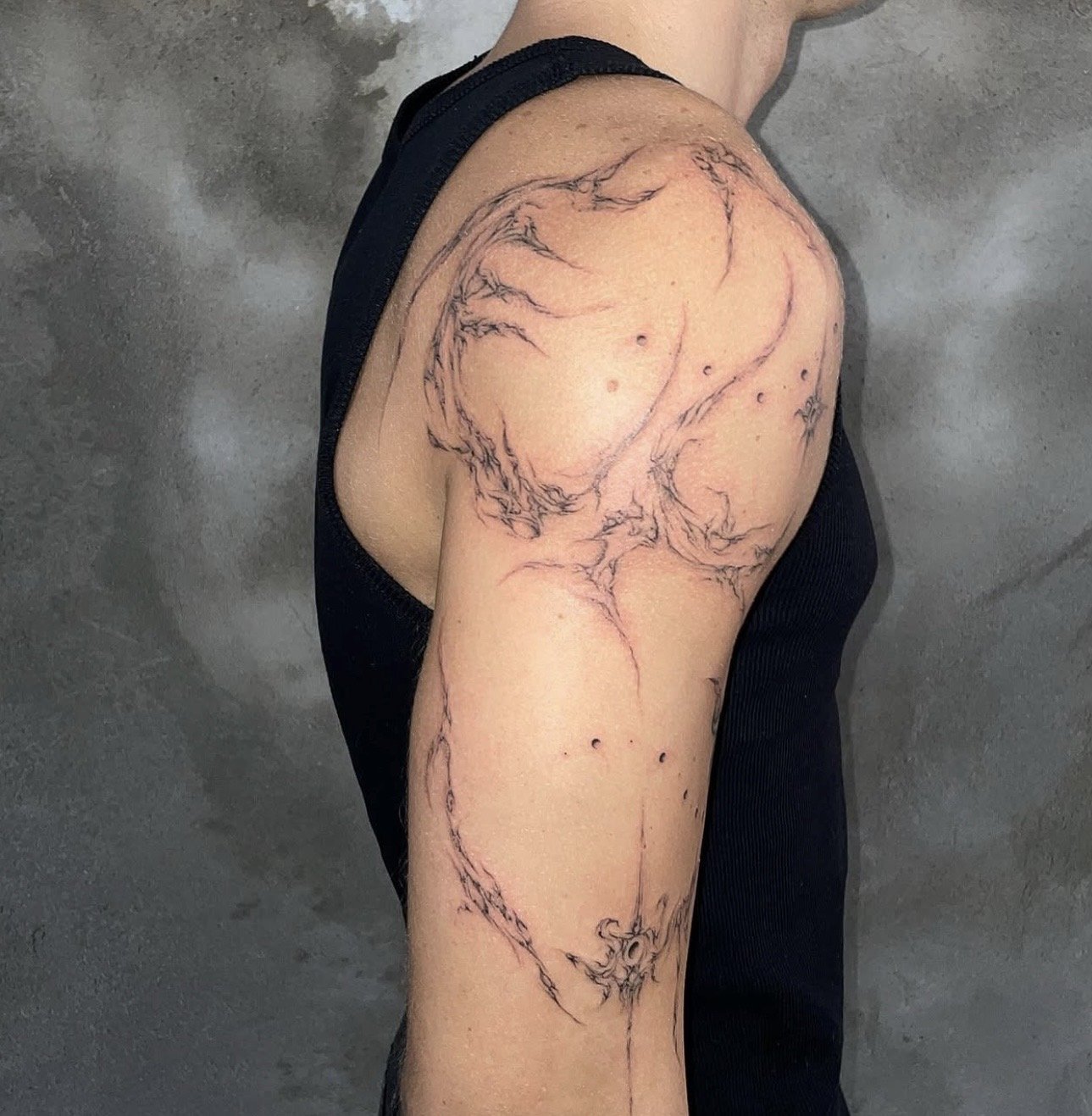
Photo: Christiane Rahbek
Her inspiration rarely comes from the internet. While Instagram once helped build her practice, she now finds it increasingly diluted. Instead, she turns to fantasy worlds, church ornamentation, vintage objects - and the tactile act of drawing with pen on paper.
This analogue approach may be part of what makes her work feel distinct in a hyper-digital age.
A Shift in Meaning
Tattoos have long been associated with rebellion. For previous generations, they carried heavy connotations - markers of subculture, defiance, and lifelong commitment.
For Gen Z in Copenhagen, the meaning has shifted.
Christiane observes two types of clients. One approaches tattooing conceptually - almost like collecting visual elements to build an avatar. The specific motif matters less than the overall composition. The body becomes a curated narrative.

Photo: Christiane Rahbek
The other seeks something more personal: shared fragments between partners, hidden symbolism, quiet markers of intimacy.
In both cases, the tone is lighter.
“It’s not that deep,” Christiane says, half-smiling. “It’s more about self-love than rebellion. Decorating your body with tattoos has become an act of self-love - just like getting your hair or nails done.”
Tattoos today function as extensions of style. Much like choosing a necklace or layering rings, they are integrated into an overall aesthetic. And in a city like Copenhagen - highly curated, highly style-aware - this evolution feels almost inevitable.
Copenhagen: Curated City, Curated Bodies
Copenhagen is often defined by its minimalism - clean lines, neutral palettes, quiet confidence. Yet the city is also deeply invested in self-staging. From fashion week to street style, aesthetics operate as social currency.
Within that context, tattoos have moved from niche to mainstream. What once felt subcultural - influenced by scenes in Berlin and Poland – is now widely embraced.
“It started more niche. Now it’s much more diverse. My clients are no longer just part of a subculture - they’re everyone.”
Young people, she notes, have also become braver with placements. Collarbones, necks, hands - areas once considered risky - are increasingly visible. While still carefully considered, they are no longer shocking. Denmark’s restrictive tattoo legislation, originally rooted in concerns about visible facial and neck tattoos, now feels almost ironic against this backdrop.
For Gen Z, Christiane points out, identity has become much more fluid. “The body becomes part of that fluidity - something to shape, reshape, narrate. Not as a permanent statement of who you are forever, but as a marker of who you are now.
Trend or Direction?
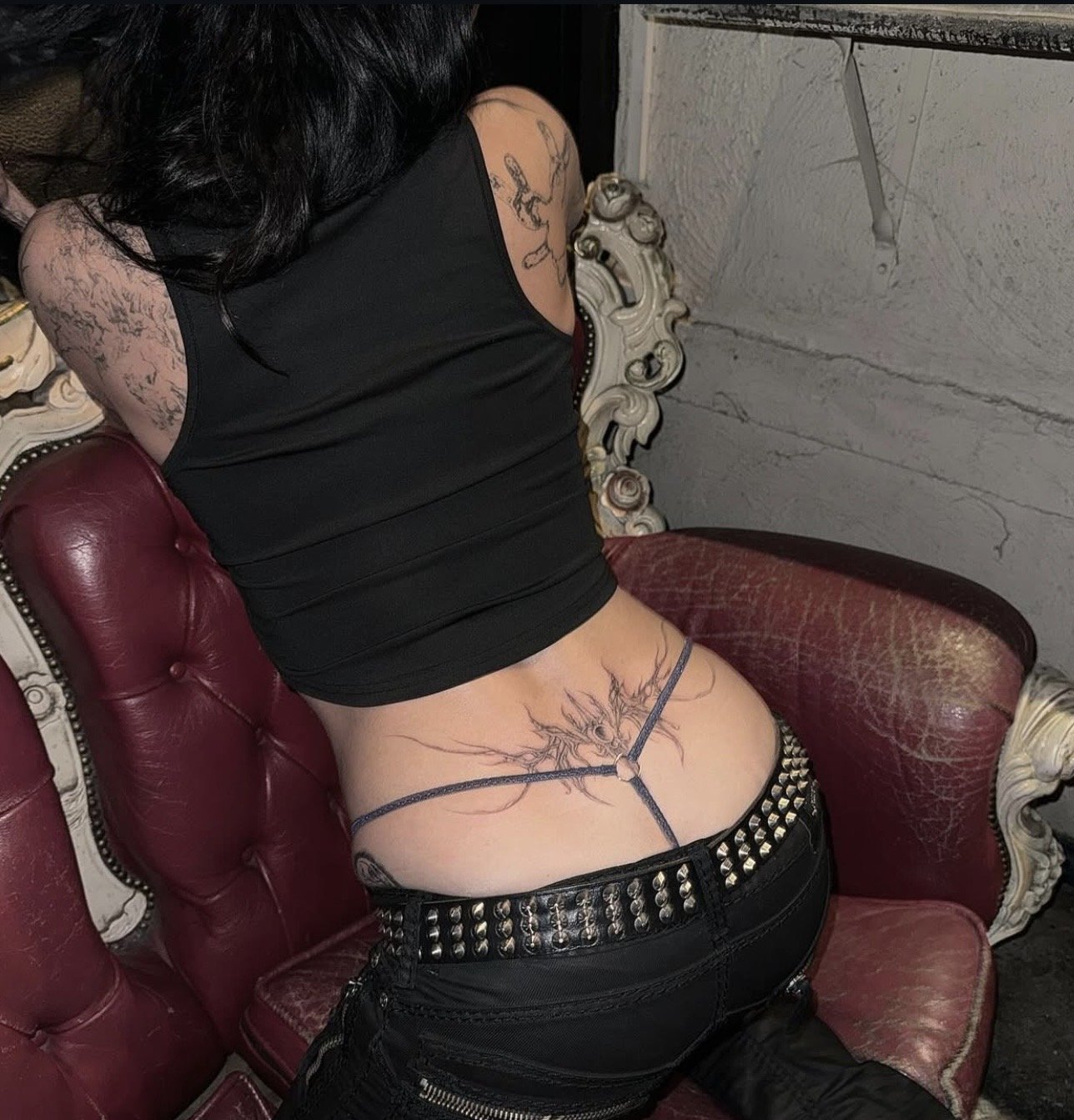
Photo: Christiane Rahbek
Tattoo trends, like fashion, move quickly. Cyber-sigilism. Collage tattoos. Irony-driven and ragebait designs. Aesthetic waves rise and fall at the speed of TikTok.
Christiane is aware of this acceleration. She consciously seeks a line that feels more timeless - something that can exist beyond the immediate trend cycle.
Is this current moment just another phase?
Perhaps.
But it also signals something deeper: a normalization of tattooing as part of everyday style. For Copenhagen’s Gen Z, tattoos are neither dramatic nor taboo. They coexist with clothing and jewellery. People dress to highlight their tattoos. They style themselves around them.
The body is no longer separate from style culture.
It participates in it.
Beyond the Skin
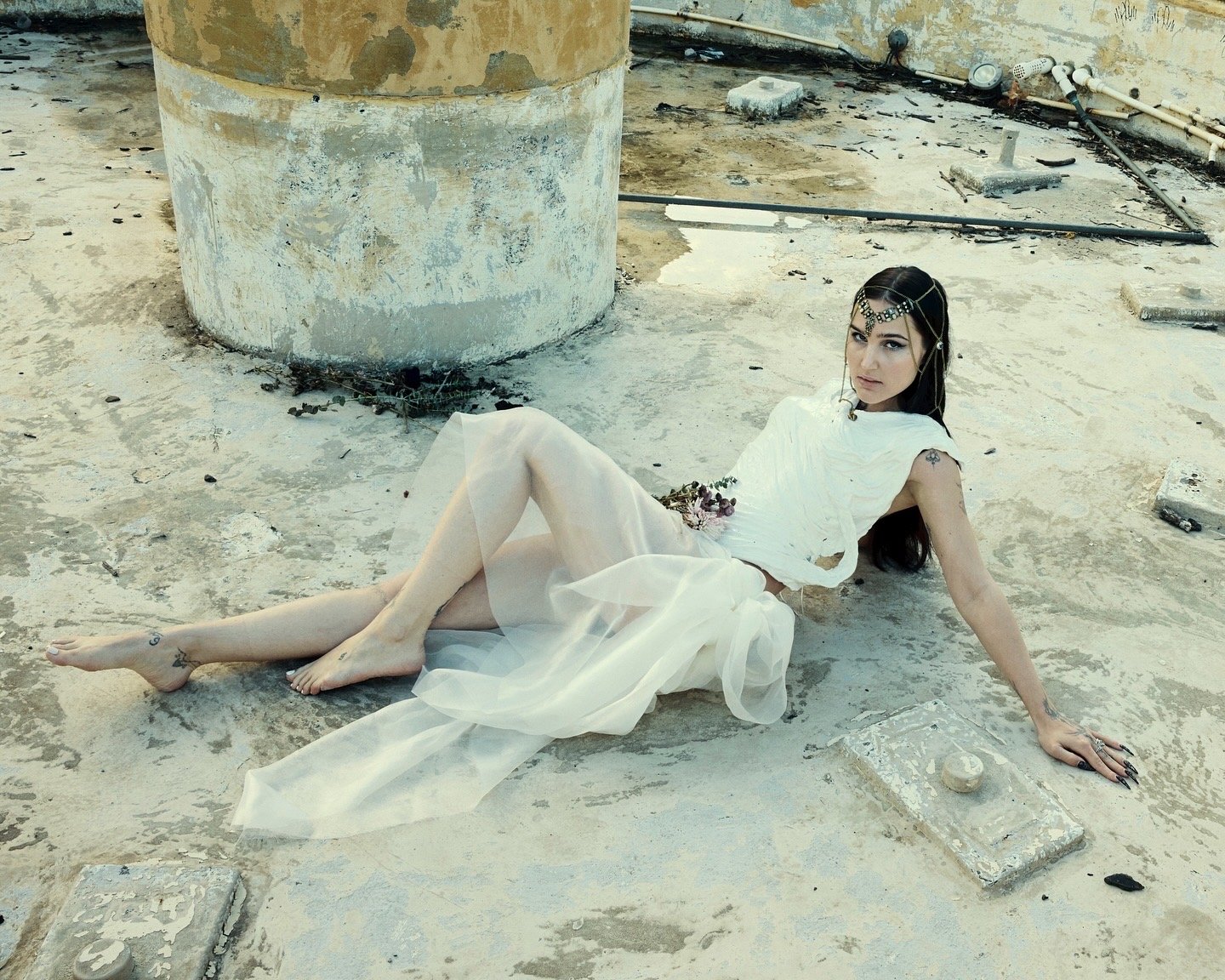
Photo: Suleiman Thomas
While tattooing remains central to her practice, Christiane Rahbek’s work increasingly extends beyond skin. She is currently collaborating on a performance with a cake artist, developing a jewellery project with a designer, and creating a bikini with a Swedish brand. Her line migrates across mediums - but its core remains the same.
“I’ve fallen in and out of love with tattooing many times,” she admits. “But there’s still so much to explore.”
While her art is deeply embedded in Copenhagen, her international clientele reflects the wider resonance of her aesthetic. Yet it is in the city’s streets - on shoulders, collarbones, and backs - that her influence feels most visible.
The body has become a curated surface in Copenhagen - and Christiane Rahbek is one of the artists shaping how it is worn.