
Analog Again: from Industrial Obsolecence to Cultural Choice
Introduction: The Return of the Analog
In recent years, objects once considered obsolete have quietly re-entered everyday life. Film cameras, vinyl records, turntables, and cassette tapes have resurfaced in domestic spaces, creative studios, and student bedrooms. Their presence is striking not because they are unfamiliar, but because they belong to a world once assumed to have disappeared.
This return is not driven by nostalgia, but by a response to a hyper-digital environment defined by constant connectivity and dematerialized experience. At a time when images circulate primarily on screens and distance-based interactions are increasingly normalized, analog practices reassert the value of contact, slowness, and material engagement.
This article traces how analog practices moved from being the norm to industrial obsolescence, and finally to contemporary reinvention, proposing analog not merely as a technical category, but as a cultural framework.
Before the Digital: When “Analog” Had No Name
Before the digital turn, the term analog simply did not exist as we use it today. There was simply no need for it because photography did not exist in any other way. The qualifier only became necessary when a new system emerged and redefined the dominant mode of production, reproduction, and consumption.
The word analog comes from the Greek analogos, meaning “proportional”, “in relation to.” In technical terms, an analog system records information through continuous physical variations that correspond directly to what is being captured: light, sound, movement. This stands in contrast to digital systems, which translate reality into numbers and codes. The distinction is not merely technological, but conceptual: analog implies continuity, materiality, and physical correspondence, while digital implies abstraction, mediation, and distance.
The widespread use of analog as a cultural and aesthetic category only appears in the early 2000s, precisely when digital technologies become dominant. The term is retrospective by nature: it names something only after it has ceased to be the norm. The label emerges not to describe a new practice, but to mark a difference, a deviation from a new digital standard
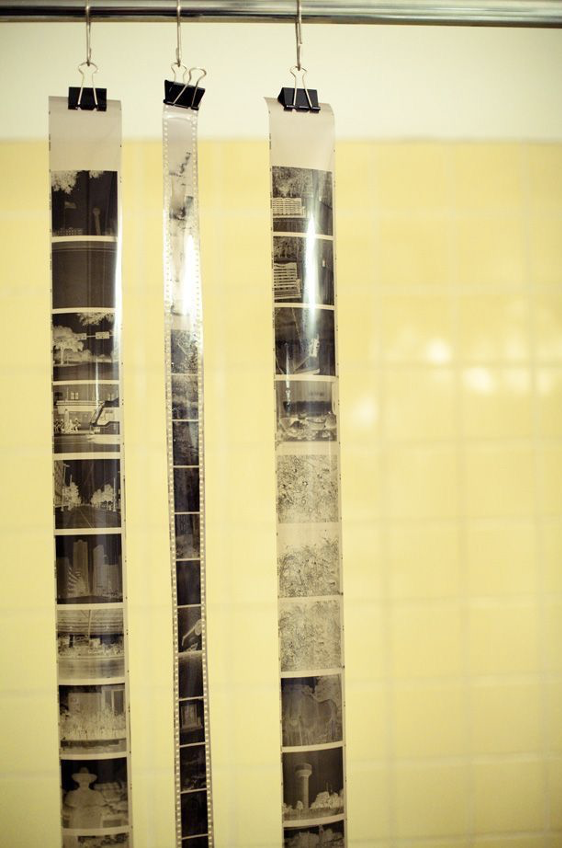
The Collapse of the Analog Market: Industry, Obsolescence, and Artistic Freedom
In the mid-1990s, a decisive industrial shift radically transformed the photographic landscape. The adoption of digital technology was a structural choice made at an industrial level. Entire production chains (film manufacturing, chemical processing, printing infrastructures) were progressively dismantled. Consequently, analog media were removed from industrial circulation but did not completely disappear. Film photography and vinyl records did not vanish; they survived in a residual state.
This distinction is crucial. Analog media ceased to have an industrial future but continued to exist culturally and artistically. From that moment on, anyone choosing to work with film photography, analog cinema, or vinyl sound did so with the awareness that these media were no longer supported by large-scale production systems. The horizon was no longer economic, but artistic. Obsolescence, in this context, became a paradoxical source of freedom. Once a medium no longer needs to justify its profitability or efficiency, it is liberated from the constraints of the market. An obsolete medium, precisely because it understands itself as obsolete, can afford to experiment, to slow down, to fail. It no longer competes with technological innovation; it exists outside of it.
In this context, analog photography is not a refusal of the present, but a critical tool. By working with slower, material-based processes, artists can reflect on time, transformation, and the conditions under which images are produced. The collapse of the analog market did not signal the end of analog practices; it marked their relocation: from industry to experimentation, from mass production to artistic inquiry.
Rediscovering the Analog: Inheritance, Reinvention, and Everyday Practices
What if the renewed interest in analog practices over the past few years was not simply a revival or nostalgic return, but a form of rediscovery? For many young adults, analog objects were never entirely absent. They existed quietly in the background: Gen Z might recall running their fingers over vinyl records on their grandparents’ shelves, noticing unused turntables, or playing with forgotten film cameras.
These objects belong to a world that is familiar yet unexplored. They carry stories and skills associated with previous generations, but had largely disappeared from everyday use. A turning point emerged during the pandemic, when daily life moved online and domestic spaces became central again. Faced with digital saturation, many turned toward tactile, time-consuming practices grounded in physical engagement.
Photography offers a clear example. Shooting on film requires patience and trust in a process without instant feedback. The delay between exposure and image transforms photography into a deliberate act rather than an automatic gesture. Similarly, listening to vinyl demands presence: selecting a record, placing the needle, and engaging with sound as a continuous experience rather than a fragmented stream.
While this recent boom has seen many young people casually adopt film photography, often through disposable cameras and playful experimentation, it is important to notice that analog photography persists and develops as a conscious medium within artistic practice. For many photographers, the choice of film is motivated by specific material, aesthetic, and technical qualities that remain irreducible to digital reproduction. A similar logic can be found in contemporary cinema, where many directors continue to shoot on film despite the availability of advanced digital technologies, precisely because of qualities that digital formats cannot fully replicate.
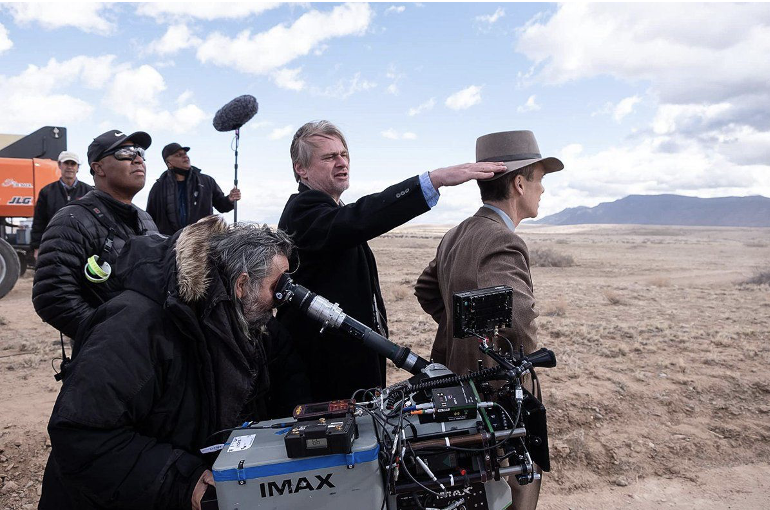
Movie Director Christopher Nolan on the set of Oppenheimer shooting in large-format film (IMAX 65mm/Panavision 65mm)
Analog and Digital Cultures: Contact, Distance, and Contemporary Experience
The renewed relevance of analog practices can be further understood through the distinction proposed by Michel Poivert between two cultural regimes: a culture of contact and a culture of distance. According to Poivert, analog culture is fundamentally based on physical proximity, material engagement, and direct interaction with objects and processes. This logic of contact is embedded in the technique itself. In analog photography, light physically impresses itself onto the film through a chemical reaction, establishing a direct and continuous relationship between reality and image. The photographic trace is produced by contact, by exposure, by duration.
Digital culture, by contrast, operates through mediation, dematerialization, and distance. Reality is translated into data, processed and computed as numerical information—a sequence of zeros and ones—before being reassembled as an image. The relationship between the world and its representation is no longer material and continuous, but abstract and discontinuous, passing through layers of calculation and code.
What is particularly striking today is that these two cultural modes coexist within the same individuals. Our cognitive and sensory habits shift constantly between digital and analog modalities. Writing a message, attending an online lecture, or scrolling through images places us firmly within a digital logic. Cooking a meal, developing a film photograph, or knitting a garment activates an analog mode of attention, one that is slower, embodied, and attentive to process.
The contemporary return to analog practices does not represent a rejection of digital culture, but a response to its saturation. As daily life becomes increasingly mediated by screens, analog activities offer moments of grounding and reconnection. They restore a sense of scale, effort, and presence that is often absent from digital interactions.
Conclusion: Living Between Contact and Distance
The renewed interest in analog practices does not stem from a refusal of the digital, but from a quiet desire to slow down. In a world calibrated for speed and constant connection, analog gestures carve out moments of pause, where hands, time, and matter meet again.
What is taking shape is not a return to what was, but a reorientation toward how we live now. Through repetition, rhythm, and embodied learning, analog practices invite attention rather than efficiency, presence rather than output. They allow space for imperfection, for waiting, for processes that unfold instead of instantly resolving.
In this way, the analog does not stand against the digital. It moves alongside it, offering a different tempo for seeing, making, and inhabiting the world, one that reminds us that meaning often emerges through contact, duration, and care.