The search for comfort
Definitions, Interpretations and Discussions.
“Comfort” is defined by the Cambridge Dictionary as “a pleasant feeling of being relaxed and free from pain, something that makes your life easy and pleasant”. Animals create shelters to rest and protect themselves from danger - we have mastered this art and, never the satisfied beings, have continued to innovate within this space. Humans of all cultures have designed living spaces and furniture in the search for comfort - from animal skins to straw beds to mattresses. Our purpose has moved from pure survival to physical and mental wellbeing, as well as the appreciation for aesthetics. The complexity of comfort lies therein - the rules that govern comfortable design are subjective. Moreover, as explained by Ahmed-Kristensen and Stavrakos from the Technical University of Denmark (DTU), there are “three main issues when designing a product to achieve comfort: (1) the exact cause of comfort may be unknown, (2) comfort is subjective, and (3) lack of ‘comfort design’ process or approach”. We will discuss within this article the duality of comfort and aesthetics, the subjectivity of comfort, the comfort of “home” within the COVID-19 pandemic, and finally the need for discomfort.
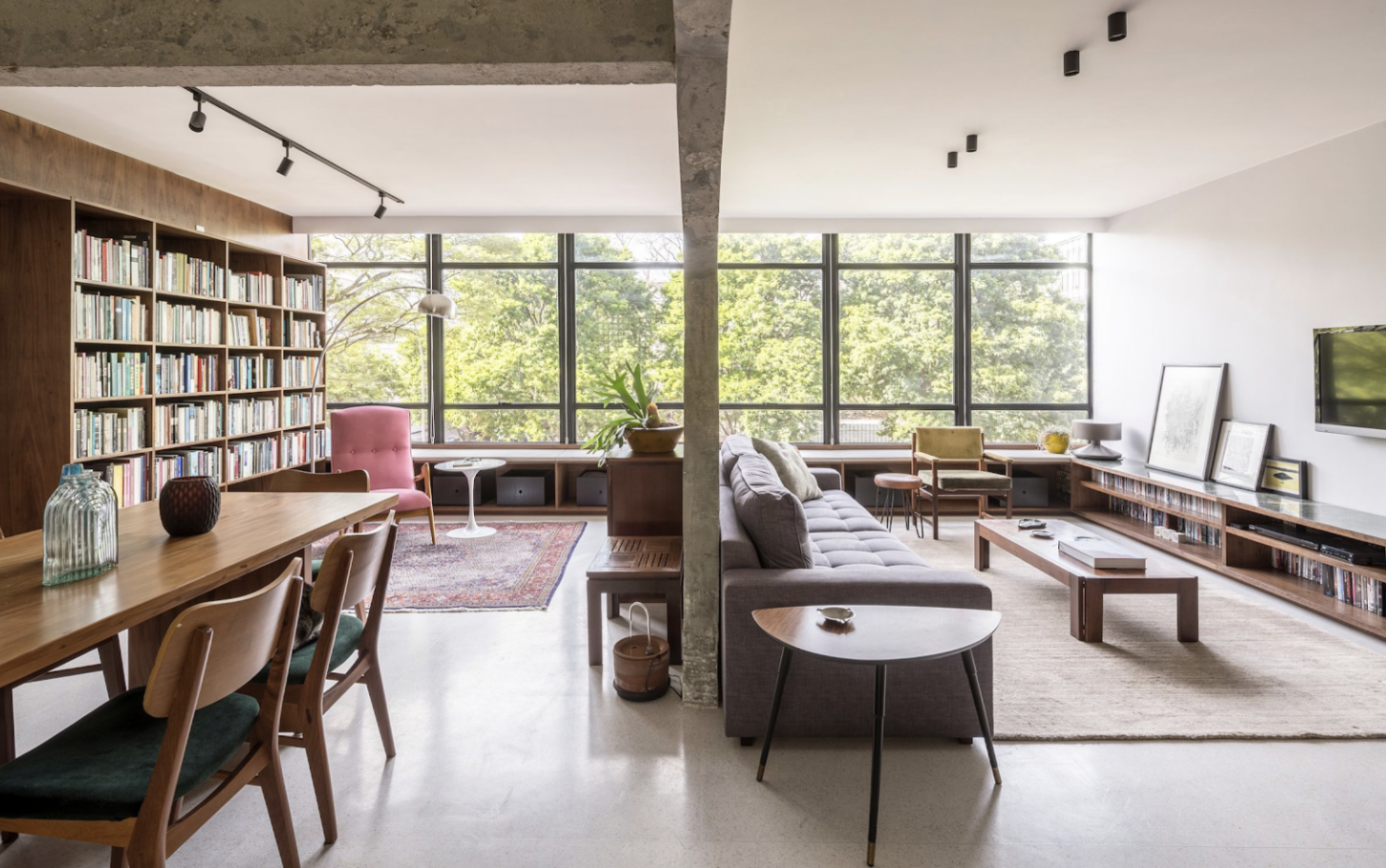
Apartment 3-Zero-8 by Debaixodo Bloco Arquitetura
DUALITY OF COMFORT AND AESTHETICS
The difficult task that designers (and for that matter artisans and engineers) face is having to choose between aesthetics and comfort - or, preferably, striking a balance between the two. As consumers, too often do we hear about “amazing” new interiors and objects from the mouths of connoisseurs only to find ourselves having an uncomfortable experience with said things. As Professor Peter Vink states, “the best way to engineer comfort into their products is to involve the end-user in the process”. Many industries have realized the need to involve the end-user within the crucial stages of ‘product’ conceptualisation and development in order for the result to actually bring value to both parties. The basic concepts of “expert push” and “market pull” can be nuanced with the notion that even if the “market” is not yet aware of what they need, implicating some representatives within the “expert push” reduces the rate of failure and lack of adoption.
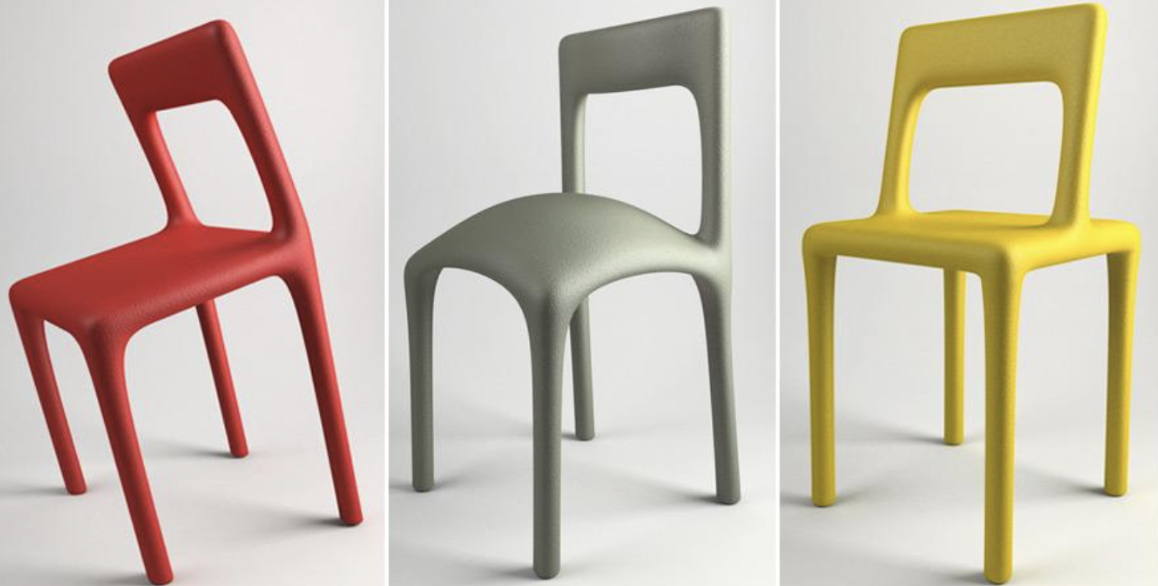
(Purposefully) Uncomfortable Chairs by KK Studios
But enough with the academic babble, we’re not here to give a lecture on design innovation management. Human intuition is enough to tell whether something is comfortable or not; however, it is also within human nature to have a bounded rationality and lose ourselves in artistic creation. Such is the limit for the interior designer: “I want to create something visually appealing, something original, something that will define the future trends - but if I want people to stay in and enjoy these spaces to their fullest extent, how far can I go?”
To take a recent example of a designer’s vision clashing with the reality of the end-user, let’s look at Madrid’s Hotel Puerta America suite by Zaha Hadid. Characterised by its white colour, fluidity and play on bold lines it is a visually stimulating environment - however it fails to provide the comfortable experience you expect from a high-end hotel. American musician Moby stayed in the suite in 2016, and was a harsh critic of the space: “[it was] the least comfortable space I’ve ever inhabited… [designers and architects] think about stuff that can be photographed well, but never actually plan on spending time in the spaces they create. Sometimes certain things like comfort are not that photogenic, and if you’ve ever tried to live in a photogenic space that isn’t comfortable, it can be really upsetting”. Just looking at images of the suite (and looking back at my article on how architecture & design affect our subconscious), we notice an issue: harsh white walls and furniture paired with harsh lighting. Although extremely creative, the space does bear an unlucky resemblance to a sterile hospital room environment.
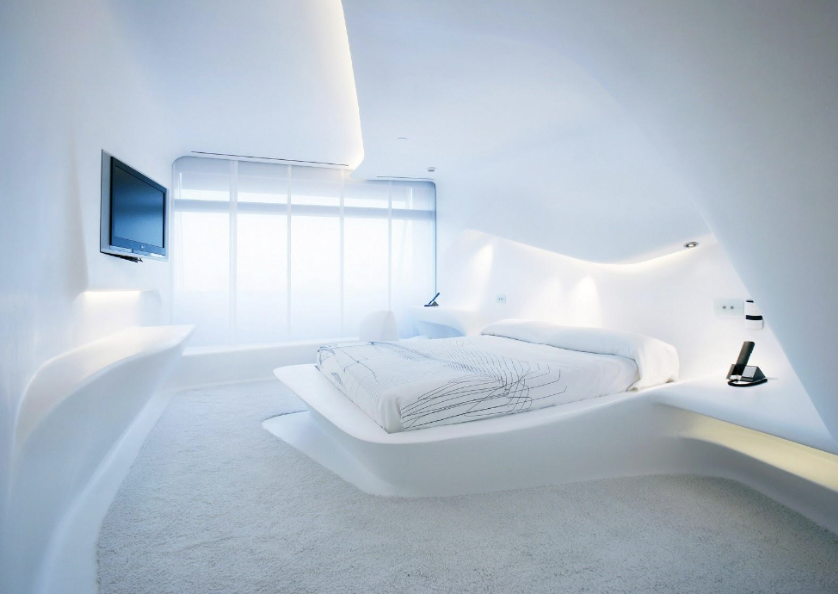
Zaha Hadid bedroom suite at the Hotel Puerta America
SUBJECTIVITY OF COMFORT
Are there any “rules” designers should follow regarding comfort? Well there’s another problem - comfort is subjective. Richards states that comfort is the state of a person that involves a sense of subjective well-being in reaction to an environment or a situation. In regards to the subjective nature of comfort Vink et al. states that “Comfort is a subjective experience. For Passenger 1 on a long distance flight, back discomfort is of great importance - Passenger 2 wants a reduction in noise and Passenger 3 needs more space”. The reality is that a person’s expectation, memory of previous products and the state, both emotional and physical, they are in will affect the assessment of comfort. Moreover, comfort is dependent on the task at hand; i.e. a chair for lounging or reading will be built differently than an office or lab chair as the tasks require different body positions. Same goes for the backseat of a family car and the seat of a race car driver - the level of safety required is different and the expectation of safety is different. Lastly, I’d like to add the dimension of time; indeed, a soft couch is comfortable to sit in after a long day of standing up, but sitting in the most “comfortable” couch will eventually be uncomfortable after extended periods of time (this also relates to the body’s need for movement and change, which we will further explore in the section on the necessity of discomfort).
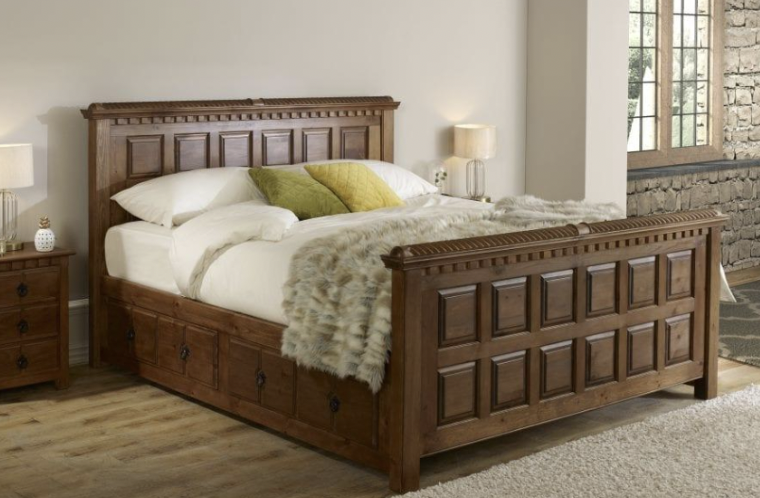
So, yes, there are certain guidelines with regard to comfortable design: support (think of your neck, back etc), pleasant to the touch, and a certain level of practicality / manoeuvrability. But all in all, what you find comfortable may differ from what I find comfortable.
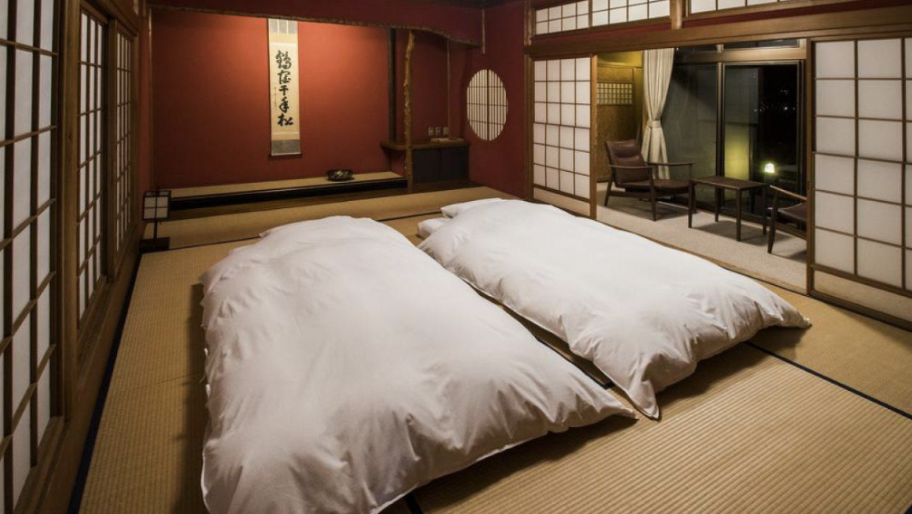
To take a concrete example, we can discuss the design of beds in different countries or cultures. In traditional japanese ryokan, beds are often arranged with “flat” pillows and a relatively thin mattress placed directly on the tatami floor - whereas classic “western” beds are arranged with plump pillows and thick mattresses placed upon an elevated bed frame. If you are used to one of these, the other might seem impractical and uncomfortable. We can debate over the pros and cons of each, but ultimately it comes down to personal preference (and cultural attachment).
PANDEMIC AND THE COMFORT OF HOME
With the COVID-19 pandemic having taken over our daily lives, many of us have been forced to work from home. Albeit a privilege and what we could call a “first-world problem”, this situation leads us to a discussion on comfort. “In the comfort of one’s home” as the idiom says, and yet this isn’t always a reality. Spending so much time confined within our “havens of peace” essentially makes us pay more attention to the aspects that have always bothered us or that are starting to bother us. Maybe we’ve decided to invest in a more ergonomic desk chair to compensate for those long hours of sitting in front of our screens, or maybe we’ve realised the “good” chair we had before has poor back support and a hard seat. The way our windows are positioned may be creating glare on our screen during those hours we usually weren’t home. Or maybe we’ve opted to do a lot of our activities directly from our bed - all experts will tell you this is a horrendous idea as it takes away the status of our intimate place of sleep and dreams.
Many individuals have come to partake in some interior re-design during the months of confinement and restrictions. Online communities surrounding design and homes, such as r/CozyPlaces on Reddit or the “Cottagecore” aesthetic movement, have gained members and seen increased activity. Many users have shared images of their work or renovations. We often see “textbook” improvements: addition of warmer lighting, dark soothing paint applied to the walls, natural elements - such as plants or wooden decor, and “soft” objects such as fluffy blankets or cushions. All these changes lead to a more soothing and intimate interior for what was once a cramped or monotonous space. As Michelle Ogundehin puts it in a recent Financial Times article: “Touchless tech, handleless doors and knee-operated sinks might be a good idea in a shared corporate space, but will have no place in the ‘New Comfort’ bubble of home, where personalisation and customisation reign supreme. After all, to be surrounded by colours, fabrics, mementoes and artworks that have deep personal significance is to be silently fortified by everything around you. [And], at the end of the day, it’s a lot harder to create healthy food in a hectic kitchen, or sleep well and exercise if you’re surrounded by the dark, drab or messy”.
Lastly, proof that our homes do not provide the same level of comfort as they used to is the increase in our need for escapism. Of course books and movies still reign supreme in the matter, but it's also interesting to look at the vast success of video games such as Animal Crossing: New Horizons. Players are able to construct their own virtual villages teeming with life, designing their own interior spaces and gardens. Minecraft, which is regarded as a modern classic, similarly enables players to build their own virtual worlds and discover randomly generated caves, mountains and villages.
THE NEED FOR DISCOMFORT & CONCLUSIONS
To finish this discussion on comfort, I would like to reflect on the need for discomfort. It goes without saying that comfort cannot exist without discomfort, the same way there is no good without evil. Ironically, we should be thanking designers that make uncomfortable objects and interiors - otherwise we would not be able to compare and determine what is comfortable. You get the point.
But I would like to explore this reflection further. Scott Carney, an investigative journalist, realized the following: “Engaging with the outdoors is as crucial as creating an indoor sanctuary – we forget this at our peril. Every nerve ending that connects our skin to our brain yearns to understand the world around it in order to help us make appropriate decisions about how to best go on living… If you’ve been wrapped in a thermogenic cocoon for your whole life, then your nervous system is aching for input. All you need to do is get a little bit outside of your comfort zone and try something out of the ordinary. Try finding comfort in the cold. You have nothing to lose”. It is after this exposure that the comfort, the warmth of your home will be all the more appreciated. This resonates even more in our current context: being forced to stay indoors, avoiding contact with others, scared of touching public surfaces... we realise just how much we valued our freedom and just how important our sensorial curiosity is. Through the cold and dark Danish winter, I find myself appreciating the fresh air, the drops of rain on my face and intensely observing the occasional snowflake gliding down from above. The embrace of Mother Nature is sometimes the most comforting.
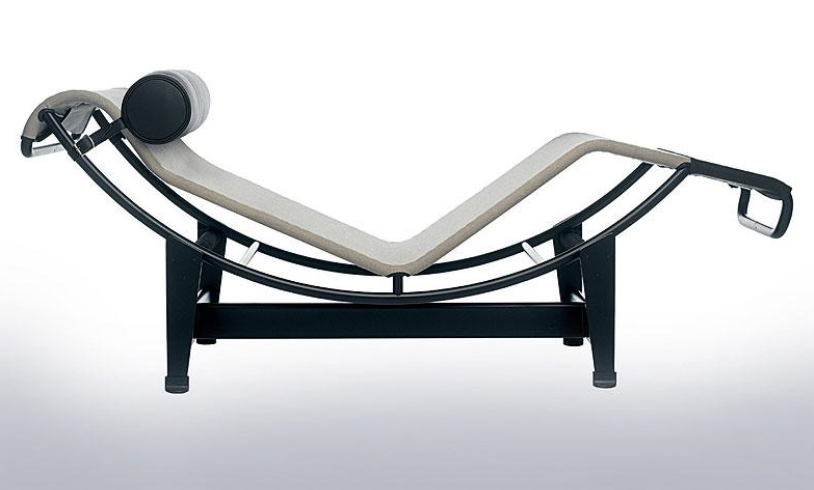
Le Corbusier LC4 Lounge Chair